Roof Older Than 15 Years Ahead of Hurricane Season? Why an Inspection Comes First
September 18, 2026
QUICK ANSWER: A roof crossing the 15-year mark has usually lost more of its wind and water resistance than it shows on the surface, and that loss accelerates every summer it spends baking under South Florida sun. The materials that keep a storm out — the adhesive seal under each shingle tab, the underlayment beneath your tiles, the nails holding the deck together — all weaken with heat cycling and age long before the roof looks obviously worn. An inspection at this age isn't about confirming the roof needs replacing; it's about finding out which specific parts have aged out of their storm resistance while there's still time to fix them before the season's most active stretch arrives. Skipping that check means finding out the hard way, mid-storm, which parts gave first.
You bought the house with a roof that was already a few years old, or you've been in it long enough that fifteen-plus years slipped by without much thought. Either way, it happens to nearly everyone. The roof still looks fine from the driveway — no stains on the ceiling, no missing tiles you've noticed, nothing that's made you pick up the phone. But hurricane season rolls around again, and this year, like every year, you have no real idea whether that roof is going to hold or whether it's been quietly losing ground since the last time anyone got up there.
The gap between "looks fine" and "actually storm-ready" is exactly where an aging roof gets people. Here's what changes at the fifteen-year mark that a ground-level glance can't catch, and why getting eyes on it now — while the season still has months of activity left — matters more than it did five years ago.
The Fifteen-Year Mark Isn't Arbitrary — It's Where Materials Start Losing Their Margin.
Roofing materials are engineered for a service life, with many standard systems designed around two decades under normal conditions. Asphalt shingles typically carry 15-to-20-year ratings, but South Florida's intense sun, heat, and cycling accelerate material fatigue significantly compared with milder climates elsewhere.
Sun and heat break roofing materials down from both sides.
It's easy to think of a roof's enemy as rain and wind, since that's what causes the damage you actually see. But the slower damage — the kind that determines how a roof performs when a storm finally does arrive — comes from sun and heat working on the materials day after day, storm or no storm. Ultraviolet exposure breaks down the oils and polymers that keep asphalt shingles flexible, and an attic that runs hot pushes that same aging process from underneath the roof deck at the same time.
This two-sided heat exposure is a big part of why roofing materials in this climate age faster than their national ratings suggest. A shingle rated for twenty years elsewhere might realistically give up meaningful resistance well before that mark here. Not because the material was inferior — because it's been working harder every single year it's been up there.
Reading the surface signs that come with age.
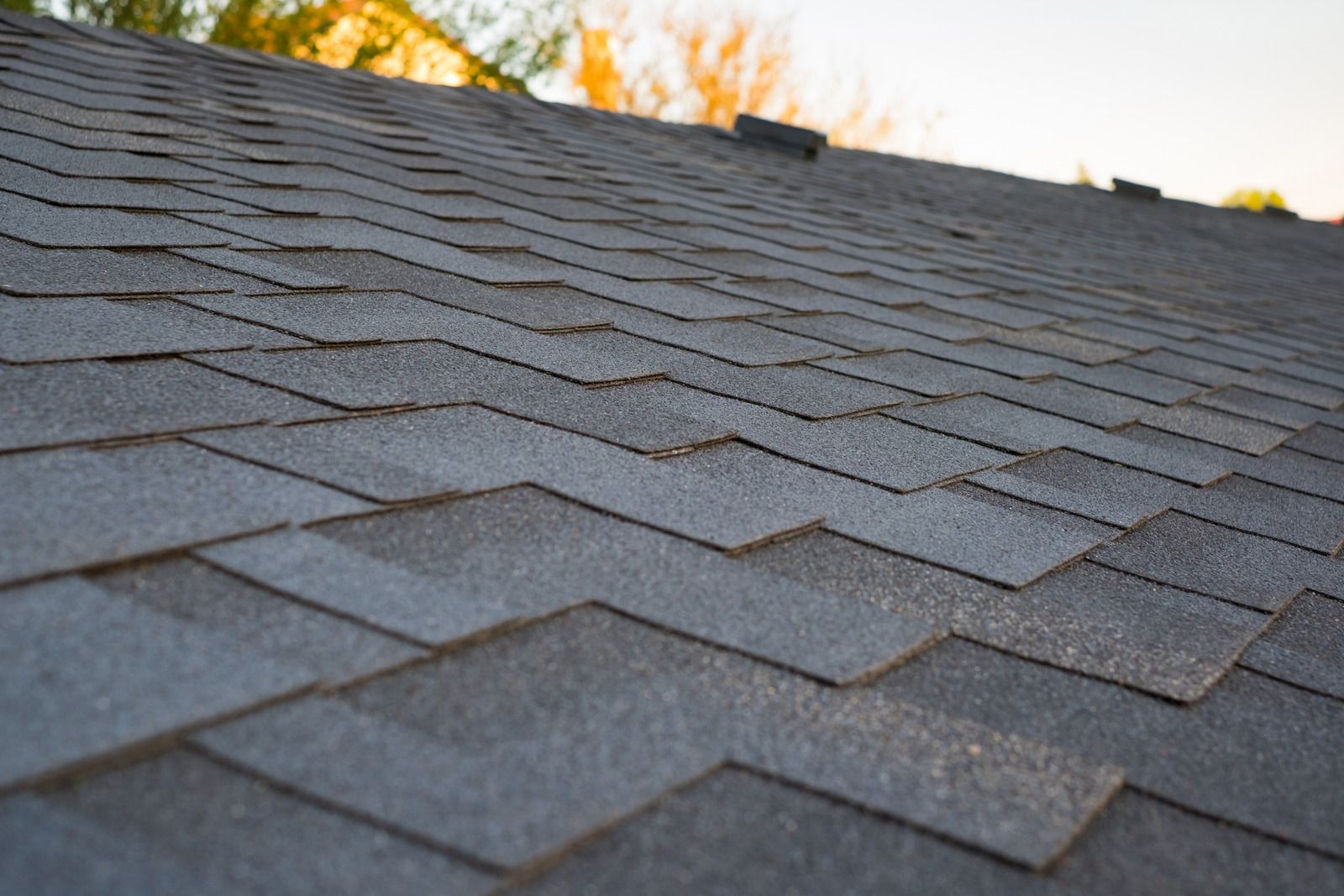
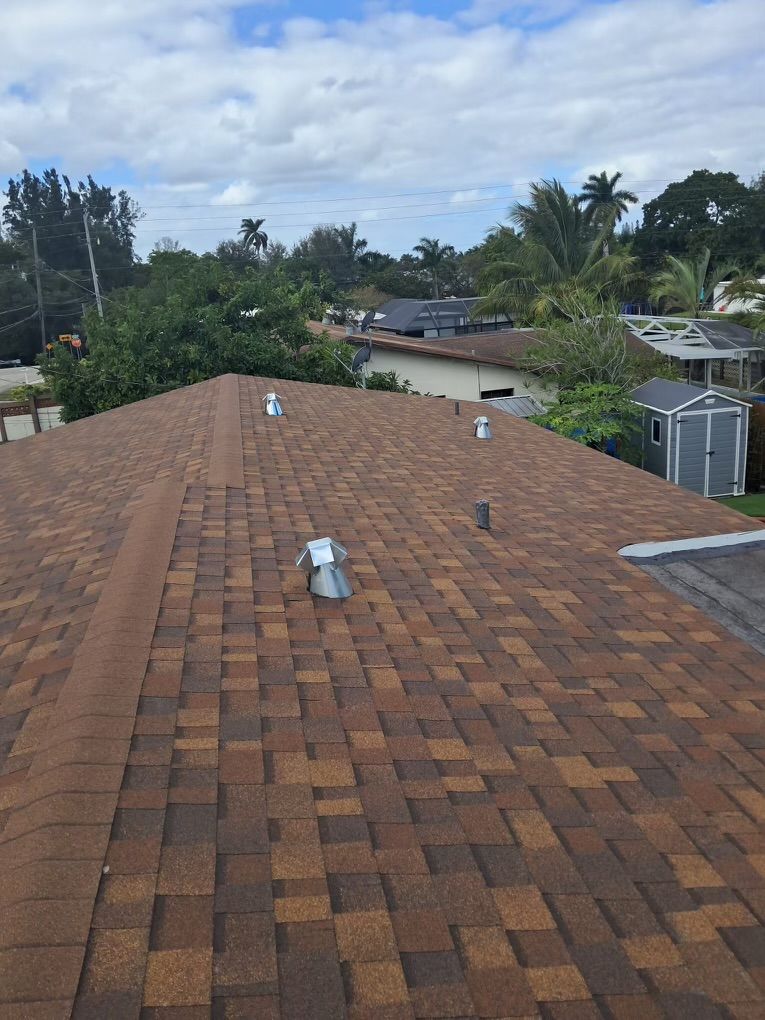
A roof doesn't announce that it's aging — it shows small signs that are easy to write off individually. Granules collecting in the gutters or at the base of downspouts mean the protective coating on asphalt shingles is wearing thin, exposing the mat underneath to more direct UV damage. Shingle edges that have started to curl upward or corners that look slightly cupped are losing the flat profile that keeps water moving off the roof instead of finding a way under it.
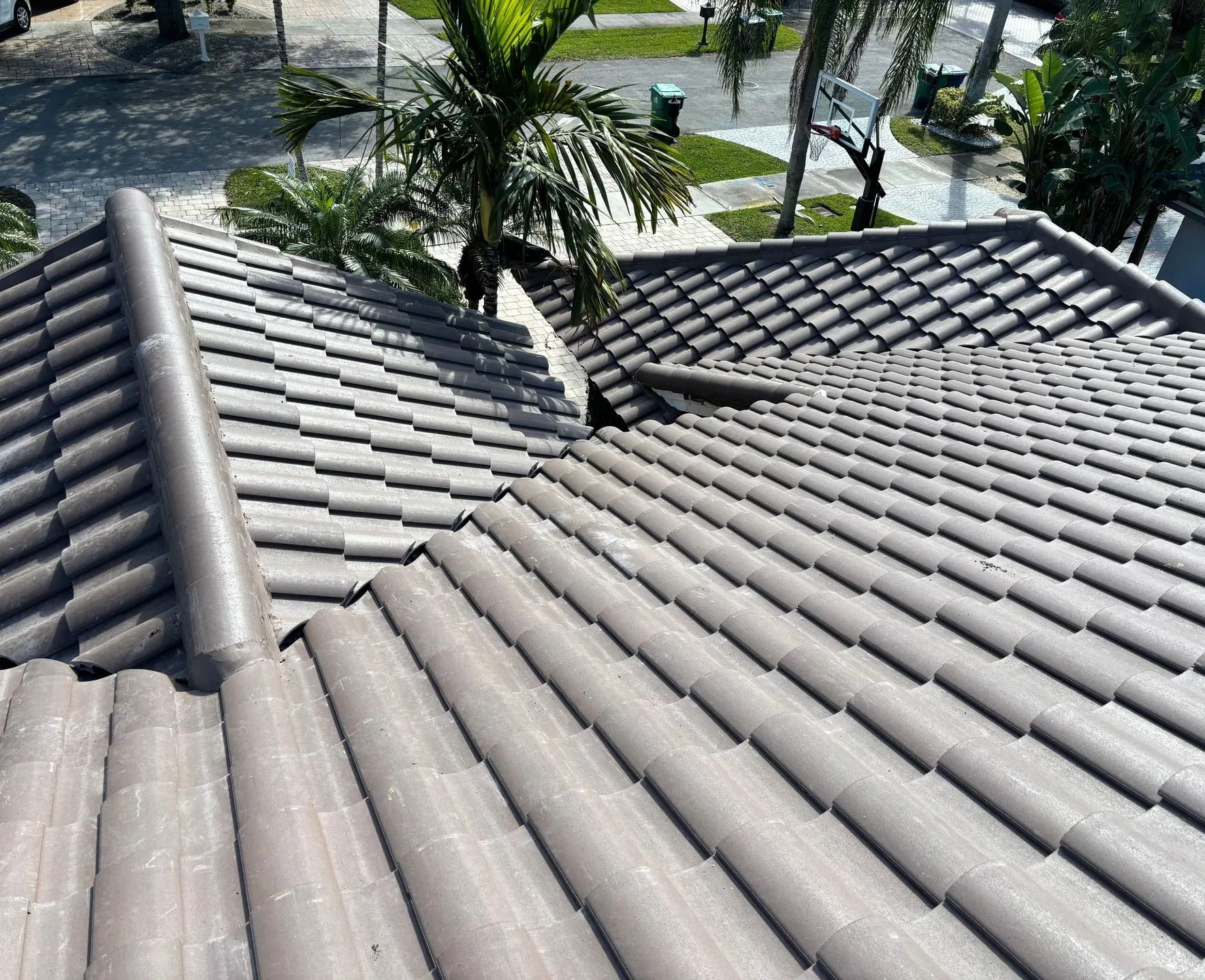
Tile roofs don't show their age the same way. Individual clay or concrete tiles can last decades longer than the roof system underneath them, so a tile roof at fifteen years often still looks intact from the ground even while the layer doing the actual waterproofing work has aged out. Sit with that for a second, because it changes what "the roof looks fine" actually tells you — which is less than you'd think.
The layer doing the real work is the one you can't see.
Under every tile or shingle roof is an underlayment — a water-resistant membrane fastened directly to the deck that's the actual barrier keeping water out if anything above it fails or lets water through. On a tile roof especially, the tile is largely a wear surface and wind-load cover; the underlayment is what's actually watertight. Modern synthetic underlayments are typically built to last somewhere in the range of the roof's overall service life, but older felt-based underlayment installed under a roof pushing past fifteen years often falls well short of that, especially with the heat cycling a tile roof deck goes through as it absorbs and releases sun all day.
Once that underlayment starts to crack, dry out, or lose its seal at the seams, a roof can look completely intact from above while water finds its way through in a heavy rain. This is the failure mode that catches homeowners off guard. Not a dramatic gap where a tile is missing — a slow seep through a layer nobody thought to check, because the tiles on top never moved an inch.
Aging fasteners and adhesive seals change how a roof handles wind.
A shingle roof's resistance to wind uplift isn't just about how the shingles are nailed down on installation day. Most asphalt shingles rely on a self-sealing adhesive strip that bonds to the shingle above it once it's warmed by the sun after installation, and that bond is a meaningful part of what keeps the roof surface locked down when wind gets underneath it. That adhesive bond ages along with everything else — years of heat cycling, expansion, and contraction gradually reduce how well it holds, even on shingles that still look physically sound.
Nail fasteners go through their own version of this. Wood decking expands and contracts with humidity and heat over the years, and that movement can work fastener heads loose in ways that aren't visible without pulling back a section of roofing to check. A roof installed to full wind-resistance standards fifteen-plus years ago isn't necessarily still performing at that level today.
The only way to know is to have someone check the fasteners and seals directly, rather than assume the original installation is still doing its job at full strength.
What a hot, poorly ventilated attic does to a roof from underneath.
Not every sign of storm stress is dramatic. Some show up gradually over the days and weeks that follow, and they're worth watching for even after the initial cleanup is done. A section of roof that looks slightly uneven or wavy from the street, where it looked flat before, can mean the decking underneath took on moisture or the framing shifted under wind load. Soffit panels that are sagging, stained, or pulling away from the fascia point to water finding a path along the roof edge rather than straight through the covering.
Streaking that appears where it wasn't before, especially dark trails running down from a valley or a roof-to-wall joint, usually means water is now traveling somewhere it didn't used to. None of these are as obvious as a bare patch where a shingle should be, and that's exactly why they get missed. They're worth a second look about a week after the storm, once the initial damage is addressed, not just the day of.
TIP: Take dated photos of every gap, cracked tile, or lifted shingle you find, from a distance and up close if you can safely get one. A simple photo record — taken the same day as the storm, before any cleanup — gives you and your roofer a clear before picture to work from, and it makes it obvious later whether a repair area is holding or spreading.
The gap between how a roof looks and how it performs widens with age.
On a newer roof, a visual glance from the ground is a fairly reliable indicator of condition, because there hasn't been enough time for hidden-layer problems to develop independently of visible ones. On a roof past fifteen years, that relationship breaks down. Underlayment can be failing under tiles that show no visible damage. Adhesive seals can be losing their grip on shingles that still look flat and intact. Fasteners can be working loose in decking that shows no outward sign of movement.
That's the core reason an older roof needs a different kind of attention than a newer one. Not because something is necessarily wrong yet — because the visible surface has stopped being a reliable stand-in for what's happening underneath it. A roof that was fine to eyeball at year five needs someone checking the layers a ground-level look can't reach by year fifteen.
The difference between a curb-level look and an actual inspection.
Most homeowners have done some version of a roof check — walking the yard, glancing up from the driveway, maybe checking the attic for obvious stains. That's a reasonable first step. It's not the same thing as an inspection built for a roof at this age.
A
real roof inspection on an older roof works its way across every slope, not just the parts visible from the street — checking granule loss and shingle flexibility, testing tile attachment, looking for cracked or slipped pieces on a tile roof, and examining flashing at every penetration point for the kind of seal degradation that develops gradually rather than all at once. It also means getting into the attic to check the underside of the decking for moisture staining, checking ventilation pathways for blockages, and judging whether the fastening pattern and adhesive seal are still holding close to their original strength. That's what separates a curb-level look from a finding that actually tells you how the roof will perform under pressure. The difference between guessing and knowing, basically, before the season tests it for you.
WARNING: Never attempt to walk an older roof yourself to check underlayment, flashing, or decking condition up close. Fifteen-plus years of sun exposure can leave decking and roofing material more brittle than it looks, and a section that seems solid can give way under weight it was never tested against recently. Everything a homeowner can safely evaluate is visible from the ground, a window, or the attic — the rest belongs to someone equipped to move across the roof surface safely.
What the findings actually tell you.
An inspection on a roof this age isn't a pass-fail exam — it's a map of exactly which systems still have life left and which ones have aged out of doing their job reliably. Some roofs at fifteen-plus years turn out to have plenty of structural life remaining, with maybe a section of flashing or a patch of underlayment that needs attention rather than a full system replacement. Others turn out to have multiple layers aging out at close to the same time, which changes the calculation entirely.
Either way, you want that information before the season's busiest weeks, not because one of those weak points gave way mid-storm. An inspection doesn't create the problem. It just tells you where the problem already is, while there's still time to do something about it.
Frequently Asked Questions
Does a roof automatically need replacing once it passes fifteen years?
No. Fifteen years is when an inspection matters more than automatic replacement. Some roofs only need targeted repairs for a few aged components, while others have multiple systems wearing out together at the same time.
My tile roof still has all its tiles, does that mean it's fine?
Not necessarily. Individual tiles often outlast the underlayment beneath them, so an intact-looking tile roof can still hide a failing waterproofing layer underneath. Tiles are mainly a wear surface, while underlayment does the waterproofing work.
Why would a shingle roof's wind resistance change if the shingles haven't moved?
Wind resistance depends on the adhesive seal between shingle courses and on how securely fasteners still hold the deck. Both age with heat cycling even when shingles look physically unchanged, so performance can quietly decline.
Is it too late to inspect a roof once hurricane season has already started?
No. The season runs from June through November, with its most active stretch usually falling mid-season. An inspection done before that peak still leaves time to fix anything found, rather than waiting for a storm.
Can attic heat really affect how long a roof lasts?
Yes, and most homeowners never check it. A poorly ventilated attic traps heat that bakes the deck and shingle underside while the sun works on them from above, speeding up the same aging process underway.
What actually happens during a professional inspection of an older roof?
It includes a slope-by-slope check of shingle or tile condition, flashing inspection at every penetration point, an attic-side look at decking and ventilation, and an assessment of how fasteners and seals hold compared to new.
What Your Roof's Age Really Reveals
Fifteen years is a useful marker, but it's a starting point, not a verdict. What actually determines how a roof performs sits in layers a driveway glance can't reach: the underlayment beneath intact tiles, the adhesive seal under flat, unbroken shingles, the fasteners holding a deck together after a decade and a half of Florida summers. Some roofs at this age still have plenty of life left. Others don't. The only way to know which one you're looking at is to have it checked.
Century Roofing Inc
has spent 30+ years inspecting roofs across Sunrise, FL, and the pattern holds true across nearly every one of them: age alone never tells the whole story. A roof can look sound from the yard and still be losing ground where nobody's checking, or it can be well past its rated years and still have solid margin left underneath. Knowing which applies to your roof, rather than guessing, is what separates preparation from hoping the season goes easy on you.